
REPORT: BAY BRIDGE TRAFFIC TO DOUBLE IF TRANSIT MEASURES FAIL
FOR IMMEDIATE RELEASESeptember 22, 2026Contact: press@strongermuniforall.comIndependent analysis finding transit service cuts would add up to 43 minutes to regional commutes
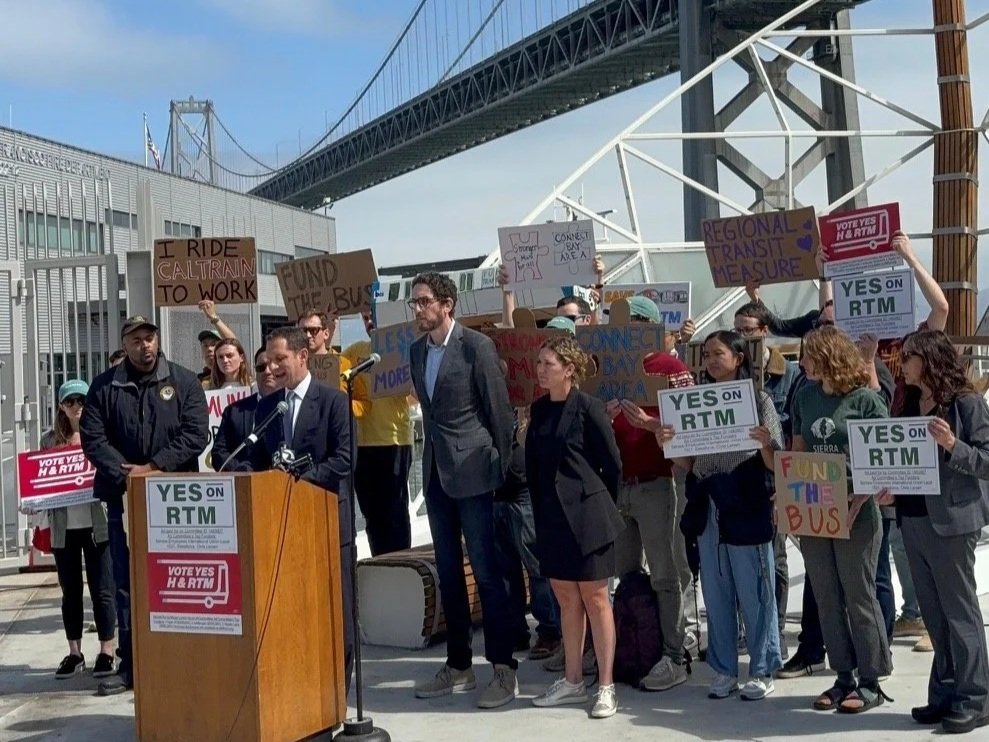
SAN FRANCISCO — Today, Mayor Lurie will be joined by Bay Area officials and transit advocates to respond to a newly released report finding that traffic on the Bay Bridge would more than double during peak commute hours if the two transit measures on the ballot fail. The analysis finds those cuts could add an estimated 33 minutes to morning commutes and 43 minutes to evening commutes across the Bay Bridge.
“To avoid crippling traffic, we must pass the Regional Transit Measure and San Francisco’s Proposition H,” said Mayor Daniel Lurie. “More traffic means longer commutes, higher costs for families, and a direct threat to our economic recovery. We have to pass these measures to keep the entire Bay Area moving.”
The study highlights the troubling impact Bay Area drivers and commuters could face if both Prop. H and Prop. RTM fail at the ballot box this November, forcing transit agencies to implement the service reductions they have already outlined as contingency plans.
Key Findings from the report:
Bay Bridge traffic would more than double during peak hours, adding 33 minutes to the morning commute and 43 minutes to the evening commute.
Transit cuts would cost drivers an average of $3,280 more per year in transportation costs.
Muni’s frequency reductions could affect up to 203,000 people on weekdays and up to 137,000 people on weekends.
Transit cuts could cause 498 million additional vehicle miles traveled per year — the equivalent of adding more than 68,200 new vehicles to the road, enough to fill a three-lane highway for 85 miles.
Approximately 430,000 people who live within one mile of a BART or Caltrain station would lose easy access to transit as their nearest station closes.
The transit measure would cost households earning up to 80% of area median income less than $7 per person, per month — less than 3% of what transit riders would incur in new transportation costs if service cuts were made.
Additional driving would generate 184,000 metric tons of CO2 annually, canceling out the carbon uptake benefits of 219,000 acres of forest, equivalent to nearly 30% of Yosemite National Park.
Regional Impacts:
I-580 — The I-580/I-680 interchange in Dublin would see delays more than double, jumping from 13 to 27 minutes — nearly a half-hour just to get through one interchange.
I-880 — Northbound delays near the I-980 interchange in Oakland would grow by 22 minutes during the morning peak, with roughly 33,000 more vehicles on the corridor daily — a direct hit to the freight and logistics industry that relies on I-880.
I-680 — Delays in the morning would increase by an estimated 15 minutes southbound during the morning peak and 20 minutes northbound during the evening.
State Route 24 (Caldecott Tunnel) — Evening peak delays would nearly triple, from 13 to 40 minutes — and BART currently moves 4,000 riders an hour through this corridor, a load that would take 120 buses to replace.
State Route 4 — Commuters in Antioch and Pittsburg, who already leave home before 7 a.m. more than drivers anywhere else in the East Bay, would face 14 more minutes of delay each way.
U.S. 101 — Traffic on the U.S. 101 through the Burlingame Bottleneck could nearly double peak-hour delays and add 30 minutes to the drive home to San Carlos from jobs in San Francisco.
Designed to be fair and affordable, and paired with a regional transportation measure on the same ballot, Prop H would prevent these devastating cuts. The measure creates a modest parcel tax, with 95% of single-family homes paying $129 annually, while renters in rent-controlled units pay no more than $65. Large property owners and corporations pay more. The measure would generate approximately $160 million per year to keep Muni safe, reliable, and affordable, with strict oversight including independent financial reviews and a citizens’ oversight committee.