
MEASURE TO SAVE MUNI QUALIFIES FOR NOVEMBER 2026 BALLOT
FOR IMMEDIATE RELEASEJune 16, 2026Contact: press@strongermuniforall.comFuture of Public Transit to Be Decided by Voters
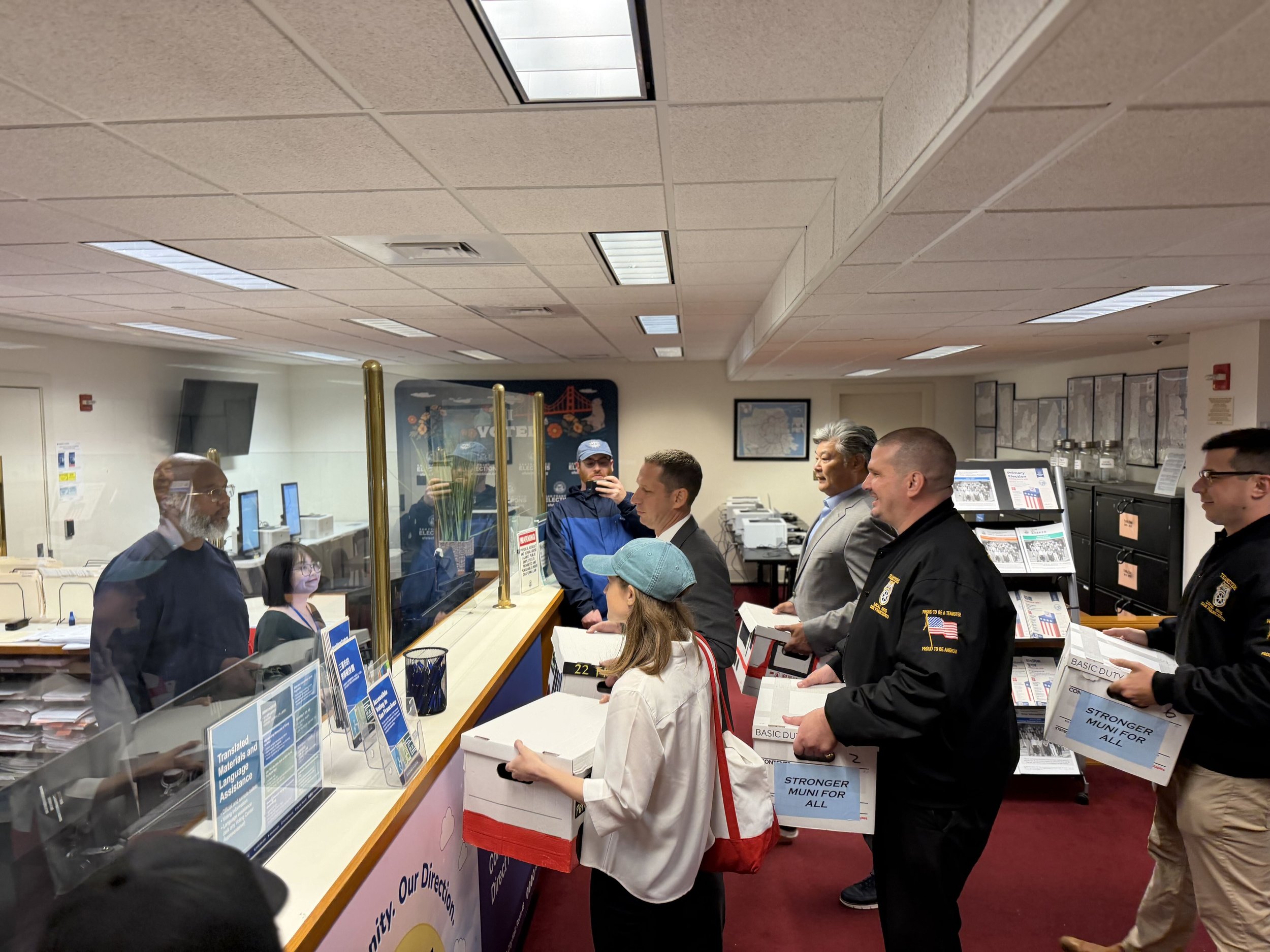
SAN FRANCISCO — Today, the San Francisco Department of Elections announced that the “Stronger Muni for All” initiative has qualified for the November 3, 2026, general election ballot. Following a random sampling verification of the 18,469 signatures submitted by the campaign, the Department of Elections determined that the measure has met the threshold of 10,600 valid signatures required for ballot qualification under California election law.
“We are one step closer to securing the future of Muni and San Francisco’s economic recovery,” said Mayor Daniel Lurie. “Muni connects every corner of this city, and without dedicated funding, the service cuts would be devastating. Cutting Muni would drive up costs for working families, set back our economic recovery, and clog our streets with more traffic. This November, I am asking San Franciscans to join me in creating a Stronger Muni for All.”
The Stronger Muni for All Measure would establish a tiered parcel tax on commercial and residential properties. Under the proposal, 95% of single-family residences would pay just $129 annually, while large landowners and corporations would pay more. Renters in rent-controlled units would pay no more than $65 annually. The measure would create a dedicated, sustainable funding stream of approximately $160 million annually to keep Muni safe, reliable, and affordable for all San Franciscans. To protect taxpayers, all revenue would be subject to rigorous oversight — including independent financial efficiency reviews and a citizens oversight committee — ensuring every dollar goes directly toward maintaining and improving transit service.
Muni has also demonstrated a renewed focus on fiscal responsibility and operational improvements. Reforms have generated nearly $137 million in ongoing annual savings, including eliminating more than 500 vacant positions, consolidating operations, reducing unnecessary management positions, and improving efficiency to help buses move faster and more reliably. In March, Muni released its latest customer satisfaction survey, with 78% of riders rating Muni service as excellent or good, earning its highest scores in 25 years and continuing an upward trend and strong service performance. Ridership has rebounded to more than 75% of pre-pandemic levels on weekdays and 92% on weekends.
The expiration of temporary pandemic-era state and federal funding has contributed to Muni facing a $307 million structural budget deficit. Without a sustainable funding solution, San Francisco would be forced to implement dramatic service reductions, including the elimination of up to 20 bus routes and significantly longer wait times for riders. Given that San Francisco already ranks among the nation's most congested cities, a weakened transit system would have broad consequences: driving more residents into cars and intensifying traffic, commute delays, and safety risks across the city's streets. When combined with the regional Connect Bay Area transit measure, which has also submitted signatures for the November ballot, these measures would prevent such drastic cuts.